
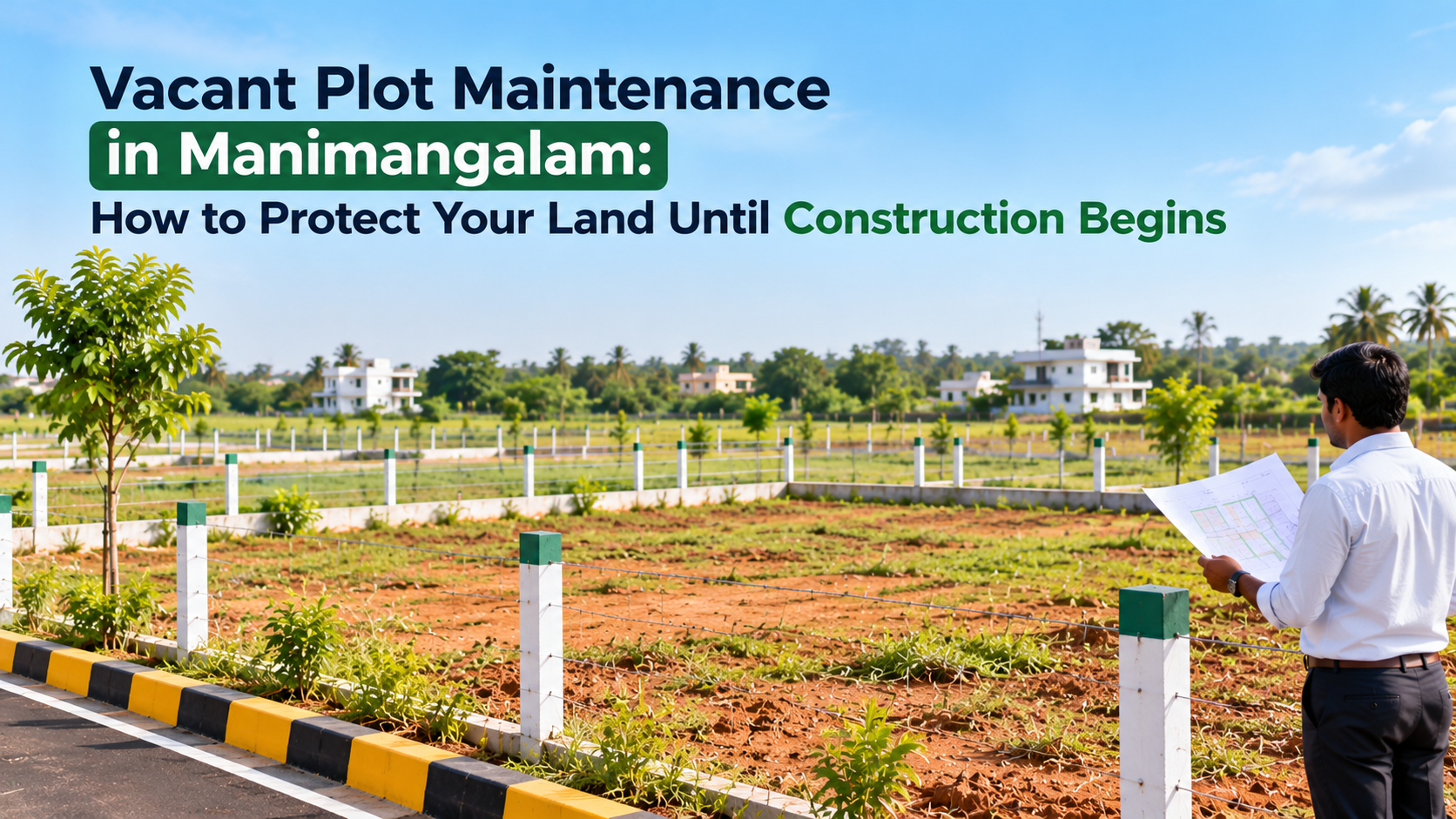
Buying a residential plot is an important milestone, whether you plan to build your dream home immediately or keep the land for future construction. However, purchasing the property is only the beginning of responsible land ownership.
Many buyers purchase residential plots in Manimangalam with plans to construct a house after a few years. During this waiting period, vacant land can face challenges such as overgrown vegetation, unclear boundary markings, unauthorised waste dumping and poor site maintenance.
Regular maintenance helps keep the property accessible, protects its physical boundaries and makes future construction planning easier.
For buyers exploring residential plots in Manimangalam, understanding how to care for vacant land can support long-term ownership and reduce avoidable site preparation expenses.
A residential plot may remain unused for several months or years before construction begins. Although vacant land generally requires less routine attention than a completed house, it should not be left entirely unattended.
Without periodic inspections, minor issues can gradually become more difficult to manage.
Proper plot maintenance can help:
A simple maintenance routine can help landowners stay informed about their property's condition without requiring frequent or unnecessary expenses.
One of the easiest ways to maintain vacant land is to visit the property periodically.
Regular visits allow owners to identify changes before they become significant concerns.
For a vacant residential plot in Manimangalam, consider inspecting the property every two or three months, with additional visits after significant rainfall or nearby construction activity.
During each inspection, check:
The appropriate inspection frequency depends on the location, accessibility and condition of the plot.
If you live outside Chennai or cannot visit regularly, consider arranging periodic inspections through a trusted local representative.
However, ensure that the person has clear instructions and does not undertake major work without your approval.
Boundary protection is one of the most important aspects of vacant land maintenance.
When a plot remains unused for a long period, vegetation, soil movement or nearby development may make its corners difficult to identify.
Before installing fencing or undertaking boundary work, verify the property's measurements against the relevant records.
Important documents may include:
Visible stones or painted markers should not automatically be treated as conclusive evidence of legal boundaries.
If the boundaries are unclear, arrange an appropriate survey through a qualified professional or the relevant government authority.
Maintaining accurate boundary information can help avoid confusion when construction begins.
Fencing can help make a vacant property's boundaries more visible and discourage casual trespassing or unauthorised dumping.
Depending on the site and applicable requirements, landowners may consider temporary fencing or a more permanent boundary arrangement.
Common options include:
The right option depends on the owner's budget, site conditions and future construction plans.
Before installing any fencing, confirm the correct boundaries and check applicable local requirements.
Fencing should not extend into adjoining properties, approved roads, drainage areas or public land.
Also remember that fencing is a preventive measure, not a guarantee against encroachment.
Vacant plots can gradually develop dense grass, shrubs and unwanted vegetation.
If vegetation becomes excessive, it may hide boundary markers, obstruct access and make inspections difficult.
A practical maintenance approach involves removing excessive growth while avoiding unnecessary disturbance to the soil.
Landowners can:
Avoid burning vegetation or waste on the property.
Open burning can create fire risks, smoke pollution and potential regulatory concerns.
Similarly, avoid using chemical weed-control products without understanding their safety and environmental implications.
Mechanical clearing or professional vegetation management may be more appropriate.
Vacant land can sometimes attract illegal disposal of household waste, construction debris or unwanted materials.
Waste accumulation can affect the appearance and usability of the property and may create additional clearing expenses before construction.
During inspections, look for:
To discourage dumping, maintain visible boundaries and consider displaying a simple ownership or no-dumping notice where appropriate.
If substantial or hazardous waste is found, contact the relevant local authority or an authorised waste-management service for guidance.
Do not attempt to handle unknown chemicals, sharp materials or potentially hazardous waste without professional assistance.
Rainfall can reveal changes in vacant land that may not be obvious during dry weather.
For plots in Manimangalam, periodic post-rain inspections can help owners identify surface erosion, blocked drainage paths and water accumulation.
Look for:
Avoid filling depressions or changing the site's level without professional advice.
Unplanned filling may redirect rainwater towards neighbouring properties or interfere with existing drainage routes.
Where significant waterlogging or erosion is observed, consult a qualified engineer before undertaking corrective work.
Physical maintenance is important, but proper document management is equally valuable during long-term land ownership.
Store both physical and digital copies of important property records.
These may include:
Keep original documents secure and maintain backup copies for reference.
If there are changes in applicable revenue records or administrative requirements, verify whether any action is necessary.
An Encumbrance Certificate reflects registered transactions and encumbrances for the period searched; an older certificate should not be assumed to establish the property's current status indefinitely.
Consult a qualified property lawyer if any ownership or documentation concern arises.
A vacant residential plot does not exist in isolation.
Development on nearby properties may influence access, drainage, boundary visibility and the general condition of the site.
During inspections, observe whether:
These changes do not necessarily indicate a problem.
However, keeping track of them can help owners identify matters that require clarification before future construction.
If you notice a possible boundary encroachment, avoid confrontation or removing structures yourself.
Document the concern and seek professional survey or legal assistance.
Access is important even when construction is several years away.
Owners may need to enter the property for inspections, surveys, vegetation clearing or maintenance work.
Check whether:
Do not assume that open land beside a road can be used as an additional entrance.
Any proposed access arrangement should respect the approved layout and applicable rules.
Maintaining proper access can make future surveying and site preparation more convenient.
Some owners may consider levelling their plot immediately after purchase.
However, major changes to ground level are not always necessary before construction planning begins.
Premature filling or excavation can create additional costs and may affect drainage or neighbouring land.
Before undertaking substantial earthwork, consider:
A qualified engineer can help determine whether grading, filling or other preparation is necessary.
In many cases, it is more practical to make major site-level decisions after the proposed building design and engineering requirements have been assessed.
Keeping a maintenance record can help landowners track changes over time.
After each site visit, record the inspection date, observations and any action taken.
A basic maintenance register can include:
| Inspection item | What to record |
|---|---|
| Inspection date | Date of the site visit |
| Boundary condition | Markers, fencing and visible changes |
| Vegetation | Growth requiring clearing |
| Waste accumulation | Type and approximate quantity |
| Ground condition | Erosion, water accumulation or filling |
| Access | Road and entrance condition |
| Neighbouring development | New construction or land changes |
| Maintenance action | Work completed or planned |
Photographs taken from consistent locations can provide useful visual records.
For example, photographing each corner and the road-facing boundary during every inspection can make changes easier to identify.
These records may also help when discussing site conditions with surveyors, engineers or maintenance contractors.
A simple schedule can make maintenance more manageable.
The following is an illustrative plan for a residential plot that is not yet ready for construction.
| Frequency | Suggested maintenance activity |
|---|---|
| Every 2–3 months | General inspection, boundary check and photographs |
| As needed | Vegetation clearing and responsible waste removal |
| After significant rainfall | Check erosion, water accumulation and access |
| Every 6 months | Review fencing, markers and neighbouring development |
| Annually | Review property records, applicable dues and future plans |
| Before construction | Arrange professional survey, engineering assessment and required approvals |
This schedule is a general guide rather than a mandatory maintenance standard.
Adjust the frequency based on the property's actual condition and local circumstances.
When the time comes to build a home, a well-maintained plot can make the initial planning process more straightforward.
However, regular maintenance does not replace the technical and legal checks required before construction.
Before beginning building work, consider arranging:
Do not begin construction solely because the plot has been fenced or maintained.
The proposed building must comply with applicable requirements, and the site should be assessed by appropriately qualified professionals.
For buyers considering residential plots in Manimangalam, understanding the responsibilities of vacant land ownership is an important part of long-term property planning.
Sigaram Enclave by Premier Housing & Properties is a residential plot project in Manimangalam for buyers exploring land ownership and future home construction.
When evaluating a plot, consider not only its location, dimensions and access but also how conveniently the property can be inspected and maintained before construction.
Buyers should independently verify relevant ownership documents, layout approvals, plot measurements, infrastructure details and current availability before finalising a purchase.
Explore Sigaram Enclave – Residential Plots in Manimangalam for project information and enquiries.
Owning a vacant residential plot involves more than purchasing land and waiting until construction begins.
Periodic inspections, clear boundary identification, vegetation management, responsible waste removal and organised ownership records can help protect the property's condition.
A practical maintenance schedule also makes it easier to identify changes in surrounding development and plan future site preparation.
For landowners in Manimangalam, maintaining vacant property responsibly can support smoother construction planning and more confident long-term ownership.
Explore residential plot opportunities and plan your property ownership journey with Premier Housing & Properties.
Premier Housing & Properties
No 11, NRD Tower, 3rd Floor,
Jawaharlal Nehru Road,
Ashok Nagar, Chennai - 600 083.